
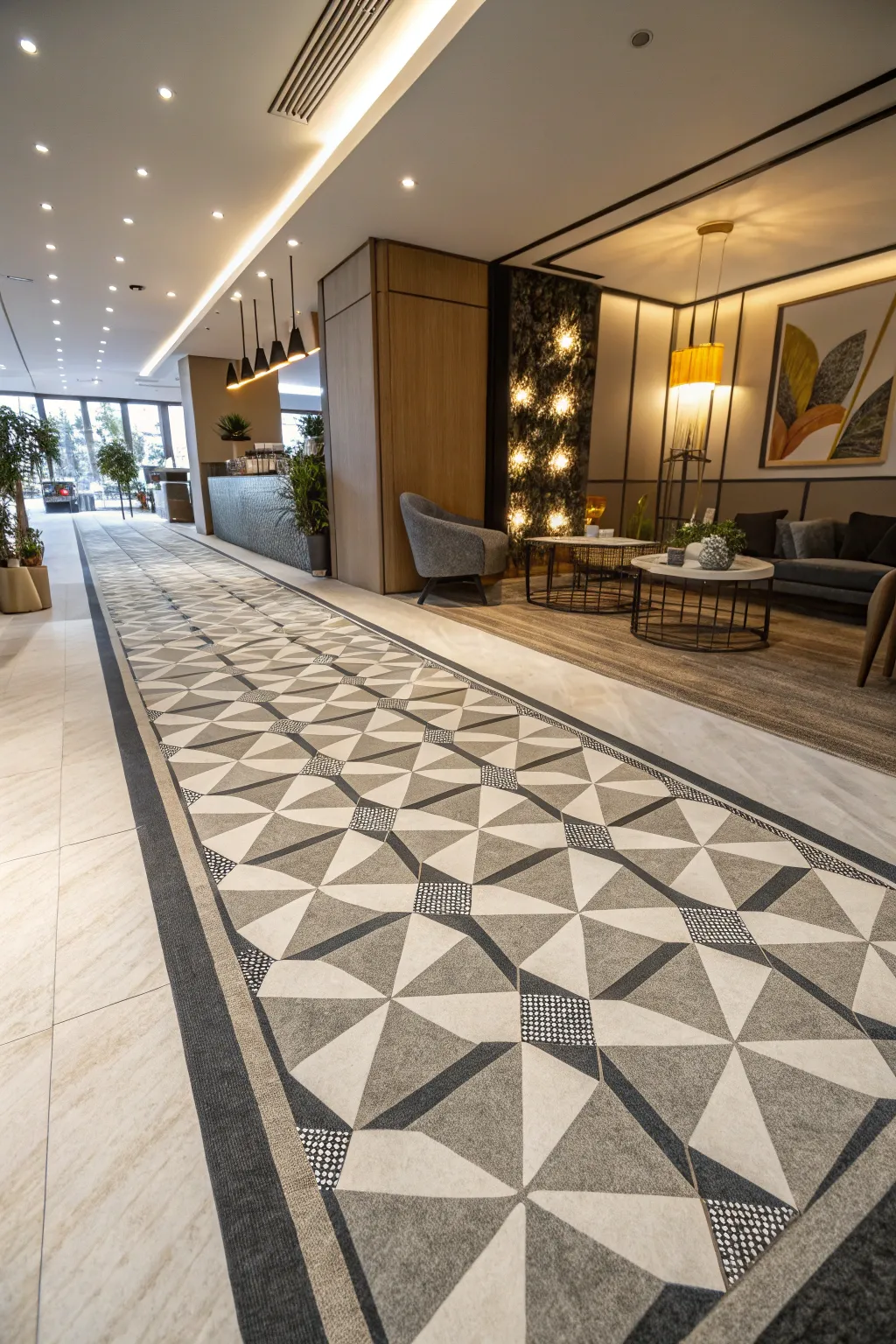
Moving from carpet to tile can pose a tricky design puzzle, particularly when the floor levels don’t align. Let’s explore some imaginative solutions to ensure these shifts are both practical and visually appealing.
Discover Free-Form Tile Border Designs

Natural forms can create a smooth flow between different flooring styles. I’ve used this in open-plan areas for a harmonious feel.
You might like:
- Stylish Floor Shift Strips: Enhance your area with stylish strips for a seamless transition between carpet and tile.
- Bendable Flooring Edge Molding: Create a smooth flooring change with bendable molding suitable for various heights and shapes.
- Nature-Inspired Tile Trim: Bring elegance to your area with nature-inspired trims that beautifully merge carpet and tile.
Select a Lip-Edge Connector

The lip-edge connector is my preferred choice for securing carpet edges beneath tiles, providing added reinforcement. It’s especially valuable in busy areas needing extra resilience.
Check these products out:
- Stronghold Lip Connector: Effectively secure carpet edges with this durable lip connector, perfect for high-use areas.
- High Traffic Seam Binder: Improve carpet durability with a seam binder, suitable for demanding, high-traffic environments.
- Adaptable Floor Joining Strip: Easily handle varied heights with this versatile strip, ensuring smooth transitions.
Incorporate Soft Gradations

Soft gradations of colors or materials offer a seamless transition. It’s one of my favorite techniques for maintaining harmony in open spaces.
Some handy options:
- Carpet-to-Tile Soft-Shift Strips: Create a smooth color transition between materials and prevent trip hazards with ease.
- Ombre Area Covers: Add a beautiful color ombre cover to naturally blend carpet and tile areas.
- Multi-Level Thresholds: Use multi-level thresholds to blend different flooring heights smoothly and stylishly.
Play with Striking Contrasts

Striking contrasts can create a dramatic effect, defining each area distinctly. In open spaces, this technique adds excitement and energy.
You might give these a try:
- Doorway Shift Bands: Create a seamless carpet-to-tile transition, adding an elegant contrast to your flooring design.
- Cover Stabilizers and Anti-Slip Pads: Ensure stability and add safety with cover stabilizers, perfectly merging style with function.
- Showcase Floor Covers: Use showcase floor covers to inject bold color and contrast, enhancing your space’s vibrancy.
Select a Metallic Shift Band

Metallic bands offer a polished, modern aesthetic, perfect for contemporary spaces. In my projects, they frequently highlight the change beautifully.
Useful items to consider:
- Customizable Metallic Floor Band: Select a customizable band for seamless leveling between carpet and tile. Improve your area today.
- Elegant Aluminum Border: Upgrade with a sleek aluminum border for a modern finish. Ideal for differing floor heights.
- Sturdy Metal Edge Band: Install a sturdy edge band for durability and style. Perfect for high-traffic areas.
Utilize Blending Strips for Seamless Shifts

Blending strips act as an artistic bridge, softening the height difference between carpet and tile. I find them ideal for spaces where understatement is key.
A few suggestions:
- Flexible Surface Smoother: Merge carpet and tile effortlessly. Use adjustable smoothers for a polished and graceful change.
- All-Purpose Terrain Bender: Promote safer movement and a refined appearance. Fit all-purpose benders connecting different floor types.
- Metallic Flooring Leveler: Elevate your floor’s visual appeal. Select metallic levelers for lasting and elegant finish shifts.
Introduce Dynamic Diagonals

Diagonal transitions add energy and movement, ideal for dynamic spaces. I’ve seen them transform ordinary areas into exciting design statements.
Explore these options:
- Interlocking Cushion Floor Squares: Enhance your space with diagonal interlocking squares for a vibrant and dynamic design statement.
- Surface Shift Strips: Use shift strips to smooth out uneven floors and add an exciting diagonal flair.
- Decor Edge Tiles: Add elegance with diagonal decor edges, perfect for a stylish carpet-to-tile transition.
Showcase Ornamental Patterns

Ornamental patterns can enhance the transition area, adding a touch of flair. I enjoy using them to inject personality into transitional spaces.
Might be a good match:
- Ornate Tile Shift Strip: Enhance your home with stylish shift strips that seamlessly blend carpet to tile surfaces.
- Themed Carpet Squares: Upgrade your space with vibrant themed carpet squares that inspire and create visual interest.
- Inlay Floor Edge Tiles: Add elegance with inlay floor edge tiles to highlight transitional areas and capture attention.
Adopt the Tuck-Under Strategy

This method stands the test of time by elegantly tucking the carpet edge under the tile, delivering a crisp, uncluttered look. I’ve implemented this in areas prioritizing function and simplicity, and the results are consistently impressive.
Items that may come in handy:
- Floorline Smoother: Achieve a flawless transition with a robust floorline smoother designed to fit perfectly. Upgrade today!
- Edgeline Finisher: Incorporate edgeline finisher for an exquisite touch that enhances the overall aesthetic. Experience elegance and simplicity!
- Firmhold Grip Nails: Secure your carpet with dependable grip nails engineered for enduring stability. Reinforce your flooring now!
Embrace Gentle Arcs

Arched transitions soften the partition, creating a pleasing flow. These are superb for areas where sophistication and ease of movement are priorities.
Maybe worth checking out:
- Arched Transition Bands: Enhance your area with gentle arcs, guaranteeing a safe, elegant floor transition.
- Adaptable Carpet-to-Tile Finishing: Design seamless transitions with adaptable finishing that beautifully merges differing floor heights.
- Arched Leveling Molding: Achieve a flawless, arched floor transition while accommodating varied heights effortlessly.
Design a Decorative Tile Perimeter

For a hint of sophistication, a tile perimeter can beautifully demarcate the transition zone. I’ve seen this particularly enhance upscale living rooms.
Some ideas to consider:
- Ornate Flooring Outlines: Enhance your area with stylish tile outlines, creating an impeccable carpet-to-tile change.
- Premium Jointing Rails: Ensure a sleek, high-quality change with top-tier jointing rails.
- Deluxe Stone Perimeter Details: Introduce luxury with stone details to gracefully adjust flooring heights.
Employ Harmonizing Hues

Harmonizing hues can tie spaces together visually without matching exactly. This approach brings balance and unity to diverse areas.
These products might help:
- Azure and Amber Hallway Covers: Enhance your hallway with a runner cover featuring azure and amber tones to unify the space.
- Themed Accent Cushions: Add azure and amber accent cushions to your sofa for a cohesive and vibrant look.
- Themed Wall Decor: Incorporate azure and amber wall art to tie together the colors from floor to ceiling.
Experiment with Artfully Placed Covers

Covers are a superb means to bridge stylistic gaps, particularly with detailed designs. I’ve used overlapping covers to seamlessly blend spaces.
Consider these options:
- Sophisticated Patterned Floor Covering: Amplify your room’s atmosphere with a vibrant floor covering, effortlessly connecting style and ease.
- Secure-Hold Cover Base: Guarantee safety and firmness with a superior secure-hold base for your stylish transitions.
- Textured Fiber Floor Mat: Incorporate depth with a fiber floor mat, creating a superb base for a refined look.
Try Edge Guards

Edge guards provide a clean and professional look, perfect for a polished finish. I’ve used them to protect edges while adding a sleek touch.
Products that could assist:
- Metallic Tile Surround Finish: Upgrade your flooring transition with sleek metallic trim for a seamless and stylish finish.
- Adaptable Carpet to Tile Edge Strip: Ensure a smooth carpet to tile transition using adaptable and durable transition strips.
- Leveling Strip with Concealed Mounts: Achieve a flawless height transition with a leveler featuring concealed mounts for clean aesthetics.
Employ Geometric Designs

Geometric designs can add a modern twist, making transitions an artistic statement. I’ve used striking designs to draw attention in minimalist areas.
A few choices to try:
- Geometric Floor Connector Strips: Create a seamless transition with eye-catching designs that add style and sophistication to your area.
- Stylish Floorline Finishing: Enhance your flooring design with stylish finishing that blends both carpet and tile elegantly.
- Versatile Height Shift Molding: Achieve a flawless height transition between surfaces with customizable molding solutions for modern interiors.