
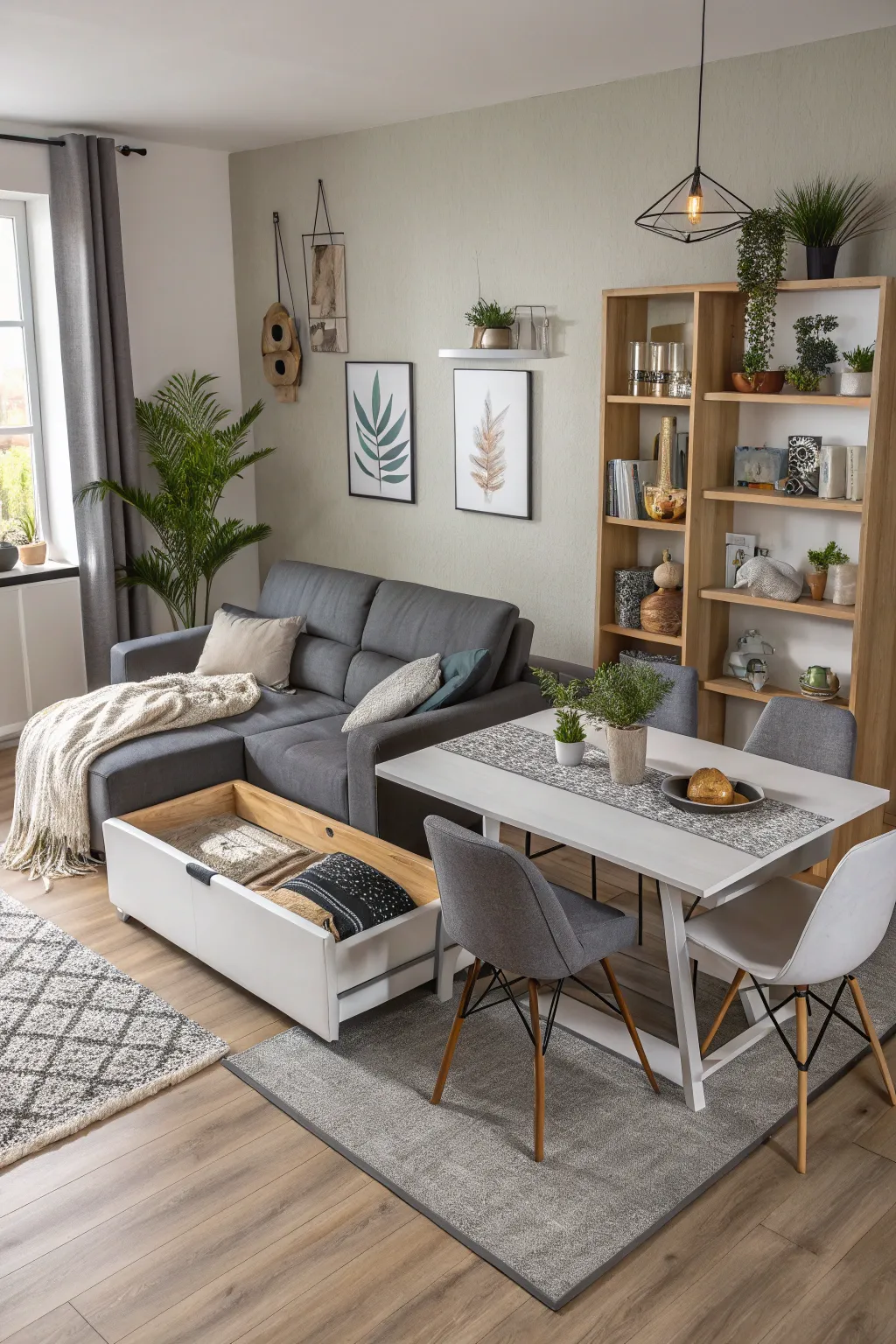
Crafting a harmonious blend between your living and dining areas can unlock delightful design potentials. Let’s dive into some concepts that ensure these shared spaces are both efficient and wonderfully unified.
Define Zones with Floor Coverings

Floor coverings offer a striking way to visually delineate spaces within a combined area. When I’m designing, picking a rug that complements both areas creates a cohesive and beautiful bond between the spaces.
Check these products out:
- Classic Woven Floor Covering: Adorn your combo space with a classic woven floor covering that enhances both rooms.
- Artistic Designed Floor Covering: Introduce an artistic flair using a patterned floor covering to unify your combo spaces.
- Subtle Shade Floor Covering: Opt for a subtle shade floor covering to harmoniously merge and distinguish both your living and dining spaces.
Maximize High Ceilings with Vertical Elements

Accentuate high ceilings by introducing vertical components such as tall bookcases or floor-to-ceiling drapes. This draws the eye upward, adding a sense of grandeur to the space.
Some handy options:
- Upright Display Cabinet: Introduce sophistication and storage with an upright display cabinet, accentuating vertical lines beautifully.
- Full-Height Window Drapes: Install full-height window drapes to draw attention to height and introduce a luxurious feel.
- Grand Central Chandelier: Elevate your dining space using a stunning chandelier, drawing eyes upward dramatically.
Incorporate a Variety of Materials for Depth

Integrate a variety of textures to inject depth and character. I’m fond of using plush rugs, soft cushions, and textured throws to craft a cozy, layered appearance.
A few helpful options:
- Plush Woven Floor Covering: Amplify comfort using a plush woven floor covering that adds warmth and flair to your space.
- Luxurious Woven Accent Throw: Introduce style and softness using a woven accent throw to enhance your seating area.
- Fancy Throw Cushions: Rejuvenate your sofa with fancy throw cushions for a cozy and welcoming ambiance.
Opt for Round Tables to Maximize Space

A round dining table is ideal for saving space and creating a more cozy dining experience. I’ve noticed it works especially well in smaller combined spaces.
Products that could assist:
- Polished Circular Dining Table: Enhance your combo space with a polished circular table for stylish, space-optimized dining.
- Modern Wrapped Dining Chairs: Pair your table with wrapped chairs for increased comfort and modern style.
- Stylish Hanging Light Fixture: Illuminate your dining area with a chic hanging light for a warm, inviting ambiance.
Use Technology Smartly

Incorporate technology discreetly into your design. Wall-mounted TVs and discreet sound systems can enhance utility without disrupting the aesthetic.
These products might be useful:
- Mounted TV Arm: Install a sleek mounted TV arm for seamless entertainment without cluttering your space.
- Hidden Sound System: Improve sound quality subtly with a hidden sound system that complements your elegant living area.
- Central Smart Hub: Manage all your tech effortlessly with a central smart hub for a sophisticated, connected environment.
Emphasize Lighting as a Design Element

Thoughtfully positioned lighting can accent distinct zones within a multipurpose room. I often use pendant lights to emphasize the dining space, paired with softer lamps to bring a cozy feel to the living area.
Useful items to consider:
- Braided Light Fixtures: Design a fashionable dining area with braided light fixtures that define and illuminate beautifully.
- Lampshade Floor Lamp: Enhance the warmth of your living room with a lampshade floor lamp for added coziness and style.
- Sleek LED Ceiling Fixture: Illuminate your space with a sleek LED ceiling fixture that balances utility with style.
Experiment with Strong Visuals

Don’t be afraid to incorporate strong visuals that can inject energy into the space. I’ve found that patterned cushions or a statement rug can add an exciting touch.
Consider these options:
- Graphical Design Rug: Transform your space with a vibrant area rug, adding color and creativity to your room.
- Accent Throw Cushions: Energize your sofa with bold throw cushions, creating striking accents and inviting comfort.
- Tinted Accent Curtains: Enhance your ambiance with tinted curtains, bringing style and vibrancy to your windows.
Fuse Contemporary with Classic

The fusion of contemporary and classic elements can result in a distinctive, eclectic vibe. I appreciate blending contemporary furniture with vintage details for a balanced look.
Explore these options:
- Century Modern Coffee Table: Introduce elegant design with this century modern coffee table to elevate your living room’s sophistication.
- Retro Wall Decor Prints: Elevate your wall decor using captivating retro art prints for a timeless classic accent.
- Fashionable Drop-Down Lighting: Illuminate your space using a chic drop-down light, combining modern design with classic allure.
Achieve Harmony with Coordinated Palettes

A cohesive color palette blends the living and dining spaces seamlessly. I’m particularly drawn to soft grays and gentle beiges to create a tranquil setting that effortlessly connects both zones.
Possibly handy products:
- Beige and Gray Broadloom Carpet: Elevate your space using this beige and gray broadloom carpet, ensuring warmth and unity.
- Soft-Touch Neutral Throw: Wrap yourself in a soft-touch neutral throw, perfect for enhancing tranquil living spaces.
- Collection of Light Decorative Cushions: Enhance your sofa with light cushions, crafting an inviting atmosphere.
Minimalist Design with Maximum Impact

A minimalist design approach can help a smaller space feel more expansive. Concentrate on essential items that offer both utility and style.
Maybe worth checking out:
- Light Shade Rug: Define your space with a subtle and elegant area rug to enhance minimalist vibes.
- Space-Saver Dining Arrangement: Maximize functionality with a space-saving dining set perfect for seamless integration.
- Modest Overhead Light: Illuminate your room with a sleek overhead light, introducing sophistication without clutter.
Craft Intimacy with Gentle Illumination

Soft, ambient illumination can establish a cozy and personal environment. I frequently use dimmable lights to tailor the mood as required.
May just do the trick:
- Tunable Micro Lights: Add a magical glow to your space with tunable micro lights, perfect for creating ambiance.
- Battery Powered Faux Candles: Elevate your room with flickering faux candles for a safe, cozy atmosphere without real flames.
- Ambient Uplight Fixture: Illuminate your living area with a stylish uplight fixture that offers soft, adjustable lighting.
Personalize with Individual Touches

Individual touches like decorative accessories can infuse the space with your unique character. I enjoy using items like vases, books, and sculptures to convey personality.
You might give these a try:
- Artistic Clay Container Set: Introduce charm to your space using elegant vases; perfect for showcasing fresh or faux flowers.
- Modern Decor Figurines: Enhance your room’s character using unique shelf sculptures for a modern touch.
- Stylized Accent Books: Transform your living area with stylish accent books, combining elegance and interest.
Foster Equilibrium Through Balance

Balanced arrangements can instill a sense of equilibrium in an open-concept area. I’ve observed that this strategy prevents either area from overshadowing the other, fostering harmony.
You might like:
- Sleek Living Room Centerpiece: Accentuate your seating area with this sleek centerpiece to enrich your living room’s balance.
- Glass Droplet Chandelier: Elevate your space using elegant chandelier lighting for a seamless blend of symmetry and flair.
- Elegant Throw Cushions: Incorporate elegant throw cushions to create harmony with subtle balanced details.
Unify Zones with Cohesive Artwork

Choose artwork that resonates with both the living and dining areas to establish a cohesive aesthetic. I’m captivated by how art can spark conversations, connecting the spaces in a meaningful way.
A few choices to try:
- Conceptual Canvas Art: Elevate your living and dining areas with vibrant conceptual art, sparking engaging conversations.
- Coordinated Framed Wall Art: Unify your spaces using beautifully coordinated framed prints, achieving a cohesive, fashionable aesthetic.
- Vibrant Geometric Wall Decor: Infuse vitality and cohesion using geometric art that ties your living and dining areas together.
Craft a Fluid Indoor-Outdoor Transition

Whenever feasible, establish a fluid transition between indoor and outdoor spaces. Expansive glass doorways or windows can enhance this link, inviting the outdoors in.
A few things you might like:
- Sliding Glass Patio Doors: Transform your space using elegant sliding glass doors for a seamless indoor-outdoor experience.
- Dual-Use Outdoor Rug: Enhance your decor with a versatile area rug designed for both indoor and outdoor use.
- All-Weather Timber Dining: Establish a harmonious flow with a timber dining set that complements your indoor furniture.
Maximize Space with the Use of Reflective Surfaces

Reflective surfaces can make a space feel larger and more open. I enjoy placing reflective surfaces strategically to bounce light and amplify the sense of space.
Try these:
- Wide Detailed Wall Mirror: Enhance elegance and space by placing a wide detailed mirror in your living room today.
- Matching Accent Mirrors: Design a fashionable focal point with matching accent mirrors in your dining area.
- Sharp Framed Wall Mirror: Open up your room by strategically hanging a sharp framed wall mirror to reflect light.
Create a Focal Point with Distinct Walls

Create a distinct wall to establish a focal point without overpowering the room. I often use a vibrant paint color or textured wallpaper to make an impact.
A few suggestions:
- Striking Paint Palette: Transform your space using vibrant paint palettes to effortlessly craft captivating accent walls.
- Embossed Wall Finish: Elevate your decor with embossed wall finish, introducing depth and style to any room.
- Adhesive Wall Covering: Easily install adhesive wall covering for a swift and stylish accent wall revamp.
Integrate Greenery for Natural Division

Adding greenery can delicately separate areas while contributing warmth and texture. I love integrating tall plants to form a natural, breathable partition.
A few relevant products:
- Oversized Home Planters: Elevate your space using oversized planters, adding a sense of height and elegance for visual partitioning.
- Decorative Plant Risers: Showcase your plants with fashionable risers, adding sophistication and natural separation to your room.
- Artificial Large Greenery: Introduce easy-care greenery using tall artificial plants for effortless natural zoning.
Incorporate Built-In Storage Solutions

Built-in storage options enhance the functionality of a combo space. In my projects, these offer a seamless look while helping to keep the area uncluttered.
Might be a good match:
- Wall-Affixed Book Storage: Optimize your space using a sleek wall-affixed book storage for stylish, clutter-free storage.
- Doored Storage Module: Conceal clutter stylishly using a versatile storage module featuring practical, subtle doors.
- Wall-Mounted Media Center: Upgrade your entertainment area using a chic wall-mounted media center that saves floor space.
Employ a Sofa as a Subtle Separator

Use your sofa to artfully distinguish the living room from the dining area, establishing clear zones while preserving an open ambiance. From my experience, situating a console table just behind the sofa can introduce extra storage and reinforce the separation.
Some ideas to consider:
- Storage Console Unit: Elevate your space by using a storage console, a blend of practical storage and refined style.
- Set of Ornate Accent Cushions: Infuse your sofa with character by adding a collection of fashionable accent cushions.
- Living Area Floor Covering: Define your living space with an exquisite floor covering that harmonizes with your decor and adds a layer of comfort.
Integrate Versatile Furniture

Versatile furniture can transform a combo space. Elements like extendable tables or storage ottomans provide practicality that I find incredibly valuable.
Give these a look:
- Extendable Wooden Table: Optimize your space with an extendable table; perfect for compact living and dynamic dining needs.
- Stowaway Bench Seat: Introduce hidden storage to your living room with a stylish bench seat; ideal for decluttering effortlessly.
- Multipurpose Sectional Sleeper: Transform your space using a sectional sleeper; perfect for accommodating guests comfortably and conveniently.