
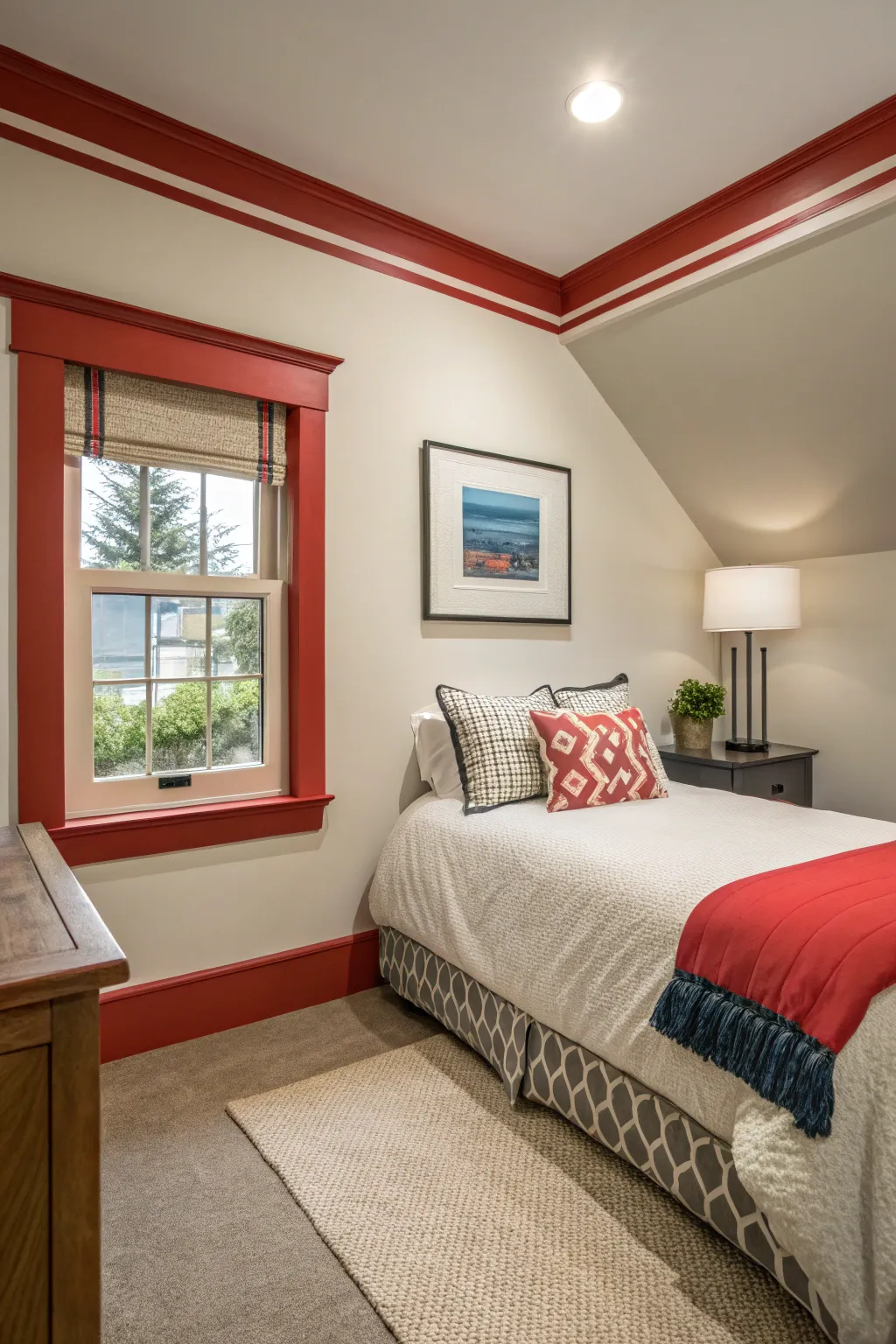
Selecting the perfect color palette has the power to morph a cramped bedroom into a warm, welcoming haven. Let’s dive into some inventive concepts aimed at amplifying the spaciousness and allure of your compact bedroom.
Create Mood with Deep Blues

Deep blue shades evoke a serene, atmospheric vibe ideal for unwinding and promoting restful sleep. It’s a go-to strategy for those seeking to introduce a touch of drama without overwhelming the space.
Some ideas to consider:
- Azure Dream Wall Color: Revitalize your space using a soothing azure dream color, perfect for a relaxing bedtime ambiance.
- Twilight Plush Throw: Incorporate warmth and style with a snug twilight plush throw for your bedroom.
- Sapphire Decor Cushion: Enhance your bed with luxurious sapphire cushions, adding comfort and a touch of refinement.
Go for Snug Earthy Tones

Earthy tones like burnt sienna or verdant olive can introduce coziness and richness to a small bedroom. They foster a warm, grounded atmosphere that feels intimate and welcoming—a strategy I’ve personally embraced in my own abode.
Possibly handy products:
- Sienna Clay Wall Finish: Transform your bedroom with a warm sienna clay finish to foster a snug, welcoming atmosphere.
- Verdant Linen Ensemble: Heighten comfort using a verdant linen ensemble that impeccably complements earthy room tones.
- Country Wood Bedside Table: Fuse practicality with flair by incorporating a country wood bedside table into your room’s decor.
Create Calm with Soft Green

Soft green shades are evocative of nature, fostering a sense of calm and renewal. In small bedrooms, they bring the outdoors in, crafting a peaceful retreat.
Some handy options:
- Verdant Mist Wall Finish: Transform your small bedroom using a calming verdant mist finish for a serene, natural atmosphere.
- Indoor Verdant Foliage: Elevate your space using lush indoor foliage to bring freshness and tranquility indoors.
- Natural Fiber Woven Rug: Incorporate warmth and texture using a natural fiber woven rug for a cozy, inviting retreat.
Opt for a Monochromatic Scheme

A monochromatic color scheme can unify the space, making it feel cohesive and larger. I frequently use this technique to maintain simplicity while ensuring a stylish outcome.
These products might be useful:
- Shadow Tone Finish Set: Transform your bedroom using a cohesive shadow tone finish set, perfect for a monochromatic style.
- Textured Shadow Bedspread: Elevate your bedroom’s unity using a textured shadow bedspread, offering style and comfort.
- Monochrome Window Covers: Complete the monochromatic aesthetic with elegant shadow window covers, incorporating privacy and sophistication.
Enhance with Natural Light

Choosing lighter colors can maximize the impact of daylight, making the room feel airy and open. It’s a strategy I invariably consider, especially with expansive windows.
You might give these a try:
- Gossamer White Panels: Brighten your space and let in light using elegant gossamer white panels. Perfect for airy rooms.
- Wall Mirror Ensemble: Incorporate depth and reflect daylight using a stylish wall mirror. Craft a spacious feel efficiently.
- Light Sand Quilt Set: Enhance bedroom coziness using a light sand quilt set, perfect for a serene, sunlit atmosphere.
Add Depth with Jewel Tones

Gem-inspired tones such as emerald or sapphire can evoke a luxurious feel, introducing depth without the need for extra decor. In small bedrooms, these hues can stand alone, offering a rich, enveloping experience.
Might be a good match:
- Emerald Canopy Wall Shade: Enhance your bedroom’s elegance with an emerald canopy shade, crafting a luxurious, calming ambiance.
- Sapphire Cloud Throw: Incorporate a rich sapphire accent with this snug cloud throw, perfect for luxurious comfort in your space.
- Gem Inspired Cushions: Elevate your decor using plush, gem-inspired cushions that effortlessly incorporate depth and style.
Incorporate Reflective Metallics

Metallic paints or decor can introduce a reflective quality, amplifying light and space. It’s a neat trick I love to employ for bringing a touch of glamour and opening up the room.
Explore these options:
- Gleaming Wall Sheen: Incorporate shimmering elegance to walls, amplifying light and space with a reflective touch.
- Gleaming Toss Pillows: Transform your bedding using gleaming toss pillows for a chic, space-enhancing aesthetic.
- Mirrored Wall Artistry: Use mirrored wall artistry to craft an illusion of more space and elevate room brightness.
Use Rich Charcoal Hues

Deep charcoal tones can impart a dramatic, contemporary edge to a small room, ideal for those who love a bold aesthetic. I enjoy pairing this color with metallic accents for a sophisticated touch.
Check if these fit your needs:
- Graphite Shadow Finish: Transform your space using a rich graphite shadow finish, crafting depth and a contemporary, bold atmosphere.
- Gilded Wall Embellishment: Incorporate elegance into your room using a gilded wall embellishment, beautifully complementing dark tones.
- Contemporary Noir Frame: Elevate your bedroom’s style using a sleek noir frame that complements charcoal hues.
Reflect Light with Pale Neutrals

Light neutral colors reflect light effectively, making the room feel larger and more open. This technique is essential for combating dimly lit spaces and enhancing daylight.
Maybe worth checking out:
- Vanilla Cream Interior Shade: Amplify daylight and make your room feel airy using a soft, vanilla cream shade.
- Light Sand Woven Mat: Brighten up the bedroom floor and incorporate coziness using a light sand woven mat.
- Neutral Glow Lamp: Craft a warm glow and amplify light reflection using a neutral glow lamp.
Combine Elegance with Cool Grays

Cool gray tones provide a sophisticated backdrop, suitable for both contemporary and traditional decor styles. I’ve observed their remarkable versatility in harmonizing various design elements within a space.
Check these products out:
- Silver Lining Wall Tone: Refresh your walls using elegant silver lining tones, beautifully enhancing modern or traditional decor.
- Contemporary Mist Rug: Elevate your floor using a chic mist rug, instantly incorporating warmth and texture.
- Refined Ash Bedspread: Transform your bed using a refined ash bedspread, seamlessly blending with sophisticated decor.
Add Character with Brick Red

Brick red is an unexpected choice that incorporates warmth and a touch of the unconventional, ideal for those seeking a unique flair. I’ve used it to exceptional effect in rooms requiring a cozy, inviting feel.
Items that may come in handy:
- Terra Cotta Interior Tint: Transform your bedroom using this warm terra cotta finish for an inviting, cozy ambiance.
- Workshop Style Hanging Light: Enhance your room’s warmth with this workshop light, complementing terra cotta tones perfectly.
- Classic Era Table Lamps: Complete your room’s aesthetic with classic era table lamps, incorporating charm alongside brick walls.
Experiment with Textured Walls

Textured paint or wallpaper can introduce depth and intrigue without crowding the space. I find it an excellent way to incorporate subtle complexity into a room’s design.
Consider these options:
- Sculpted Wall Covering: Incorporate depth and elegance into your small bedroom using easy-to-install sculpted wall covering.
- Wall Pattern Set: Craft unique patterns on your walls and personalize your bedroom using a wall pattern set.
- Stippled Paint Applicator: Transform your walls with ease using a stippled paint applicator for intricate designs.
Experiment with Two-Tone Walls

Employing two-tone walls can cleverly delineate spaces within a small bedroom, introducing visual intrigue. Combine contrasting colors like soft sky and white for an elegant, layered aesthetic—something I’m eager to integrate into multifunctional spaces.
Try these:
- Sky Whisper Wall Tone: Transform your bedroom using soothing sky hues to foster a calm, stylish atmosphere.
- White Silk Finish: Enhance elegance in your space with pristine, white silk finish paint for a crisp aesthetic.
- Painters Precision Film: Achieve crisp lines and a professional finish using high-quality painters precision film.
Brighten with Sunny Yellows

Vibrant yellow shades infuse a small bedroom with warmth and optimism, making it feel more cheerful. I’ve employed this technique to uplift the mood in spaces yearning for a bit of sunshine.
Useful items to consider:
- Lemon Burst Toss Cushions: Inject a burst of sunshine into your bedroom using vibrant lemon burst toss cushions. Uplift in an instant.
- Golden Radiance Bed Topper: Transform your bed into a cheerful sanctuary using a golden radiance bed topper. Enhance warmth today.
- Citrine Table Glow: Illuminate your space using a chic citrine glow, bringing both style and warmth to your room.
Utilize Fresh Whites

Pure white walls are a classic choice for small bedrooms, boosting light and giving the impression of greater space. From my experience, white can seamlessly unify disparate elements.
You might like:
- Pristine Snow Wall Finish: Brighten your space with a pristine snow finish for a timeless, spacious feel instantaneously.
- Ivory Fleece Wrap: Enhance comfort and style with a snug ivory fleece wrap for your bed or chair.
- Chic Ivory Lamp: Incorporate refinement and gentle lighting using a sleek ivory lamp for the perfect ambiance.
Create an Illusion with Horizontal Stripes

Horizontal stripes can make a room appear wider, amplifying the sense of space. This optical illusion is a clever trick I’ve employed in narrow rooms.
A few choices to try:
- Self-Adhesive Wall Stripes: Easily apply these self-adhesive wall stripes for a quick room transformation.
- Dual Tone Finish Set: Achieve a perfect stripe design using this easy-to-use dual tone finish set.
- Painters Edge Shield: Ensure sharp, crisp stripes using this high-quality painter’s edge shield.
Soften with Muted Lavenders

Gentle lavender is a soothing choice that introduces a subtle hint of color without overwhelming the senses. I’ve seen it flourish in bedrooms where tranquility is the foremost aim.
A few relevant products:
- Lavender Haze Finish: Transform your bedroom into a calming retreat using this beautiful muted lavender finish.
- Floral Whisper Drapes: Amplify daylight beautifully using these soft, floral lavender-inspired drapes.
- Framed Botanical Art: Craft a serene ambiance using botanical art that flawlessly complements lavender tones.
Spotlight with a Feature Wall

A striking accent wall can serve as a visual anchor, drawing the eye and incorporating dimension. Pick a bold shade like navy or deep forest green—I’m consistently amazed by how it can elevate a simple wall into a compelling focal point.
Give these a look:
- Deep Ocean Wall Tint: Elevate your space using a lavish ocean tint to instantly craft a deep feature wall.
- Statement Wall Adornment: Transform your feature wall with cutting-edge artwork that effortlessly infuses character and panache.
- Suspended Wall Shelves: Optimize your feature wall by introducing elegant suspended shelves for displaying decor or storage.
Lean into Gentle Pastels

Delicate pastel shades, such as soft blush or tranquil mint, evoke a sense of openness, making your small bedroom feel more expansive. In my experience, this works wonders in rooms starved for natural light, infusing a subtle radiance that encourages relaxation.
These products might help:
- Serene Hues Wall Coating: Revitalize your space with a soothing pastel coating, instantly enlivening small, dimly lit areas.
- Gossamer Tinted Drapes: Amplify daylight using sheer tinted drapes, crafting an airy, inviting feel in your bedroom.
- Tranquil Toss Cushions: Infuse your decor with snug sophistication through tranquil toss cushions, ideal for cultivating a serene, restful ambiance.
Play with Contrasting Trim

Employing a contrasting color on trim or moldings can frame the space and introduce visual intrigue. I love how this simple technique can accentuate architectural details and incorporate character.
Possibly helpful picks:
- Superior Trim Paint: Enhance your trim using bold colors to effortlessly spotlight your room’s architecture.
- Precision Painters Shield: Achieve crisp edges and perfect lines when painting your trim using this reliable painter’s shield.
- Supreme Brushes and Rollers: Utilize top-notch brushes and rollers for a smooth and precise painting experience on your trims.