
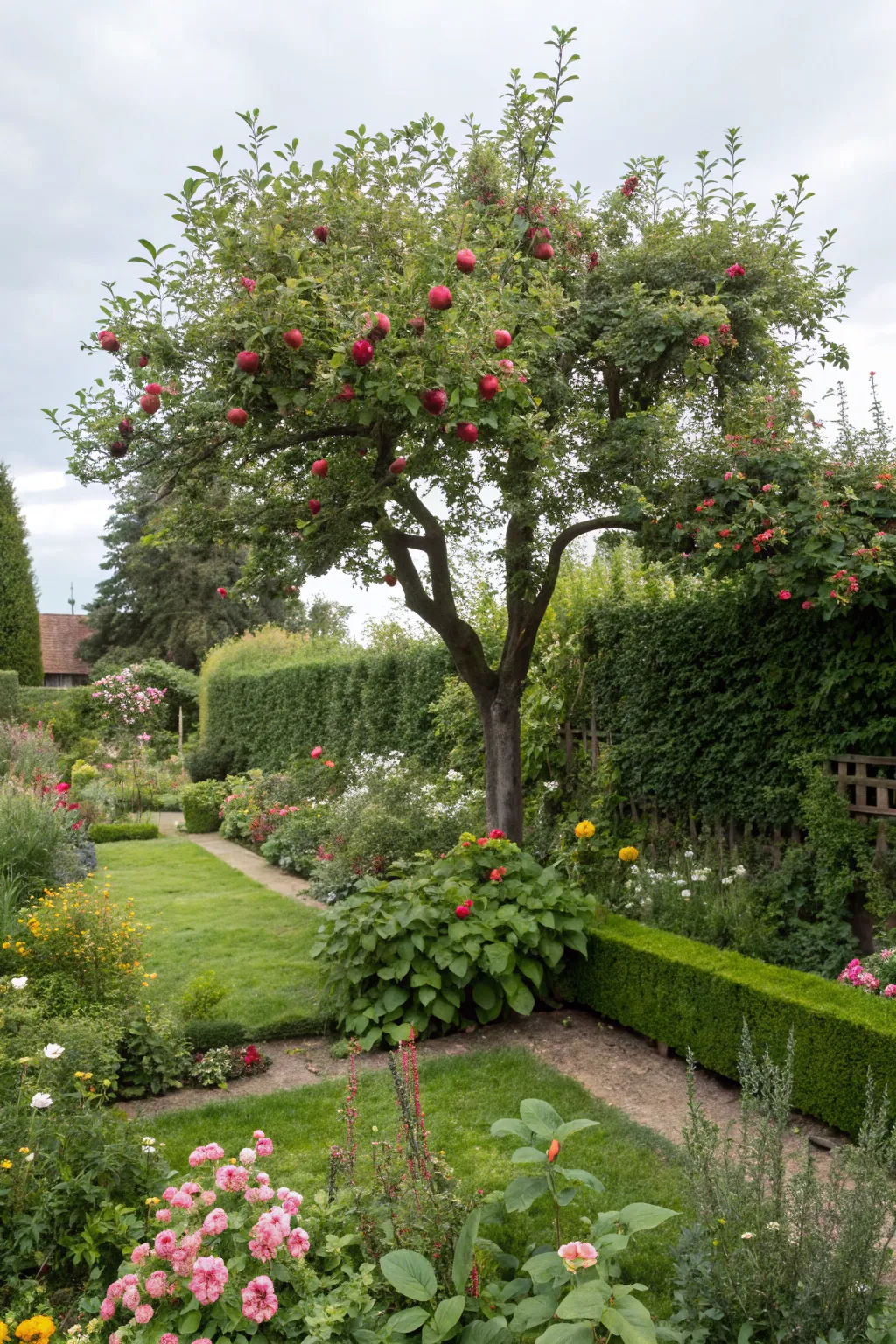
Have you ever imagined a garden that’s as delightful to eat from as it is to look at? Step into the world of tasty landscapes, where your outdoor space transforms into a visual delight and a source of food.
Edible Seclusion Screens

Craft a living seclusion screen using dense foliage, such as compact peach trees. This not only adds privacy but also yields delicious peaches in the summer, which I’ve loved in my home.
Possibly handy products:
- Compact Peach Tree Seedlings: Enhance privacy using dense foliage and relish refreshing peaches each summer right in your backyard.
- Pure Peach Tree Enhancer: Encourage your peach trees’ growth with a nutrient-rich, pure enhancer for superior harvests.
- Nursery Trickle Watering Assembly: Guarantee consistent hydration for your edible screens using this efficient trickle irrigation system.
Grains for a Surprising Element

Think about growing grains, such as barley or oats, for a unique twist. My experiment with growing barley brought a rustic touch to my garden and sparked conversations with visitors.
A few suggestions:
- Barley Seeds for Growing: Change your garden using barley seeds, which will enhance both beauty and functionality.
- Artistic Nursery Planters: Enhance your garden’s aesthetics using stylish planters that are great for growing grains like barley or oats.
- Nursery Tool Compilation: Guarantee seamless gardening with essential tools that make growing and maintaining grains easy.
Natural Harmony with Regional Flora

Integrate your garden with the existing scenery by using regional snackable flora. This method, which I’ve adopted in my own space, not only boosts local ecosystems but also lowers the upkeep needed.
Give these a look:
- Elevated Flowerbed Assembly: Upgrade your garden design using an elevated bed kit, ideal for integrating regional flora.
- Regional Flora Seed Assortment: Effortlessly grow a variety of regional edibles using a specialized seed assortment.
- Eco-Conscious Nursery Ground Cover: Use eco-friendly ground cover to improve moisture retention and soil quality for your flora.
Small-Scale Areas with Pot Cultivation

Don’t have a yard? It’s not an issue! Pot cultivation enables you to nurture herbs and small greens on patios or balconies. My compact apartment balcony shows the significant effect that small areas can have.
You might give these a try:
- Layered Pot Sets: Utilize vertical space on your balcony to the fullest using layered pots designed for herbs and small veggies.
- Automatic Watering Pots: Maintain consistent moisture levels in your plants with handy automatic watering pot options.
- Pure Potting Soil Blend: Give your plants a superior start to promote vigorous growth with pure potting soil.
Vertical Gardens for Area Maximization

Vertical gardening is great for small areas, allowing you to grow up instead of out. In my compact backyard, my vertical herb garden has been a game-changer.
Some ideas to consider:
- Wall-Mounted Planter Set: Maximize small areas with a wall-mounted planter that’s perfect for a vibrant vertical garden.
- Dangling Planter Sacks: Add versatility to your garden with hanging planter sacks designed for herbs and smaller plants.
- Auto-Watering Vertical Planter: Maintain consistent moisture with an auto-watering vertical planter that’s ideal for keeping plants healthy.
Elevated Beds for Flexible Cultivation

Elevated beds are a game-changer when it comes to arranging your edible garden. They’ve been instrumental in managing space and soil quality in my Atlanta garden, making it easy to combine herbs and greens.
Try these:
- Wooden-Style Elevated Bed Assembly: Enhance your garden’s structure with this simple-to-build elevated bed kit today.
- Nursery Hand-Tool Compilation: Boost your gardening effectiveness with this dependable tool set that caters to all growing requirements.
- Pure Vegetable Seed Selection: Kick off your garden with diverse pure seeds for refreshing, homegrown veggies.
Vivid Displays with Snackable Blossoms

Why not scatter some snackable blossoms, such as firestare or pansies, among your greens? As I’ve discovered from my own experiments, they inject a pop of color and a delightful taste into your garden.
May just do the trick:
- Snackable Seed Collection: Elevate your garden with a selection of snackable blossoms, offering dynamic colors and delicious culinary possibilities.
- Pure Planting Mix: Nurture your snackable blossoms with this pure soil, encouraging robust growth and stunning flower production.
- Elevated Flowerbed Assembly: Establish a special area for your snackable blossoms using this user-friendly flowerbed assembly.
Herbs for Scent and Taste

Cultivate scented herbs, like jasmine and thyme, along walkways for a delightful sensory experience. Strolling through my garden feels like entering a fragrant sanctuary!
A few things you might like:
- Jasmine Seed Collection: Grow your own fragrant jasmine plants and turn your walkways into scented getaways.
- Thyme Seed Collection: Grow thyme alongside your paths to experience an enjoyable scent with every step you take.
- Aromatic Nursery Beginner Set: Begin your aromatic garden journey with this comprehensive beginner set for fragrant herbs.
Changing Shades with Edible Flora

Create changing color schemes using edibles such as painted corn. Its vibrant stalks bring a burst of color to my garden all through the growing season.
Maybe worth checking out:
- Painted Corn Seeds: Grow your own vibrant painted corn for a dynamic and tasty addition to your garden.
- Veggie Nursery Enhancer: Nourish your snackable flora for a vibrant, colorful garden that lasts all season long.
- Elevated Flowerbed Assembly: Upgrade your garden arrangement using this simple-to-assemble elevated bed for optimal flora growth.
Ascending Vines for Vertical Intrigue

Incorporate vertical interest using ascending vines like scarlet beans. These are not only visually appealing but also supply a steady stream of fresh beans, a staple in my cooking.
Products that could assist:
- Nursery Frame for Ascending Plants: Enhance your garden’s vertical space with this frame, providing the perfect support for scarlet beans.
- Pure Scarlet Bean Seeds: Start your vertical garden using these pure scarlet bean seeds. Fresh beans are waiting!
- Plant Fastening Clamps: Secure your ascending vines effortlessly with durable plant clamps. Keep growth organized.
Decorative Additions with Snackable Perks

Incorporate decorative additions, such as bird fountains or artistic pebbles, among your edibles for visual appeal. I’ve personally witnessed how these details can amplify the garden’s charm while benefiting nearby wildlife.
A few choices to try:
- Artistic Bird Fountain: Improve your garden’s allure and draw in wildlife with this decorative bird fountain.
- Nursery Artistic Pebbles: Bring attractive visual details to your garden using these enchanting artistic pebbles.
- Dangling Basket Pots: Highlight your edibles using fashionable hanging pots that are ideal for small spaces.
Edible Soil Shields

Employ edible soil shields, such as mint or savory, to fill spaces and hinder weeds. They’ve been my secret weapon in maintaining a garden that’s both beautiful and functional.
These products might be useful:
- Pure Mint Seeds: Grow pure mint seeds for a flavorful, aromatic ground cover that naturally controls weeds.
- Savory Plant Beginner Set: Start your savory garden using a convenient kit, which adds beauty and snackable goodness to your scenery.
- Herb Planting Collection: Use this chic planter set to seamlessly grow mint and savory in your garden or on your patio.
Combined Gardens with Varied Flora Combinations

Mix decorative and edible plants for a garden that is both attractive and fruitful. In my garden, pairing lilies with peppers enhances the view and repels pests naturally.
A few helpful options:
- Pure Pepper Seeds: Easily cultivate your own delicious peppers and improve your garden’s yield.
- Lily Flower Seeds: Incorporate vibrant color and natural pest management to your garden using lily seeds.
- Nursery Soil Blend: Make sure your plants thrive with nutrient-rich soil that’s perfect for combined plant arrangements.
Distinctive Edibles for a Unique Touch

Play around with unusual edibles like celeriac for an elegant feel. I was captivated by its striking beauty when I first planted it, and it has since become a garden favorite.
Check these products out:
- Celeriac Seeds: Plant these celeriac seeds to add a bold, stylish touch to your edible scenery today.
- Nursery Spade for Planting: Use a sturdy nursery spade for easy planting of celeriac and other unique edibles.
- Pure Enhancer for Veggies: Enhance growth and taste in your edible garden with this pure vegetable enhancer.
Organized Layout with Balanced Patterns

An organized garden featuring balanced patterns can be both visually pleasing and efficient. I’ve used this approach to design neat rows of lettuce and tomatoes that are as lovely as they are productive.
Check if these fit your needs:
- Nursery Pattern Blueprint Collection: Organize your garden accurately with this design kit, ensuring flawlessly balanced rows.
- Elevated Flowerbed Planter: Boost your garden’s symmetry by using these adaptable elevated beds for organized growing.
- Nursery Row Markers: Use these sturdy garden row markers to maintain the cleanliness of your symmetrical garden rows.
Fruit-Bearing Trees as Main Attractions

Position fruit-bearing trees as an eye-catching feature in your landscape. In my garden, a central apricot tree captures attention and yields tasty fruit each fall.
Explore these options:
- Apricot Tree Seedling: Improve your garden using a stunning apricot tree seedling that flourishes and produces fruit.
- Fruit-Tree Enhancer: Promote your fruit tree’s growth with a specialized enhancer for abundant and healthy harvests.
- Orchard Sculpting Instruments: Maintain your fruit tree’s appearance with sturdy sculpting instruments for optimum health and yield.