
Step into the enchanting world of gardening, where planting a seed is an investment in future beauty. Whether you’re just starting out or have years of experience, these 100 gardening secrets and innovations will help your garden flourish like never before.
Discourage Pests Through Neighborhood Planting

Pair vegetation thoughtfully with neighborhood planting. For instance, planting basil near tomatoes can deter pests and boost development.
Check if these fit your needs:
- Natural Basil Seeds: Cultivate basil beside tomatoes to naturally suppress pests in your garden.
- Tomato Sapling Supports: Reinforce tomato development with resilient supports, ensuring robust vegetation.
- Neighborhood Planting Guide: Explore effective vegetation pairings with this guide to improve your garden’s condition.
Construct Foot Mats Using Foliage

Craft unique foot mats by embedding foliage into setting compound. These add a personal touch to any garden path.
Some handy options:
- Setting Compound Mold for Foot Mats: Easily create exceptional garden foot mats with a reusable setting compound mold. Ideal for do-it-yourself enthusiasts!
- Garden Foliage Press Set: Effortlessly capture delicate foliage patterns with this do-it-yourself press set. Design unique patterns effortlessly!
- Exterior Setting Compound for Foot Mats: Craft durable, weather-resistant foot mats for garden walkways using this strong setting compound.
Cultivate Enhanced Sweetness Using Neutralizing Powder

Sprinkling neutralizing powder around your tomato plants helps to lower the earth’s acidity, which results in more flavorful tomatoes.
These products might help:
- Natural Neutralizing Powder: Increase your garden’s output by adding natural neutralizing powder, leading to more delightful and tastier tomatoes.
- Earth Balance Indicator: Easily assess your earth’s acidity to ensure optimal conditions for sweeter tomatoes.
- Sapling Braces: Give your growing tomato plants structure with durable braces, supporting excellent fruit formation and maturation.
Using Pads to Hold Moisture

Position a pad at the base of your containers to retain hydration. The absorbent material holds onto water, which keeps your vegetation hydrated for an extended period, especially in warmer environments.
Possibly helpful picks:
- Highly Absorbent Pads: Retain moisture effectively with these pads, perfect for maintaining vegetation hydration.
- Environmentally Safe Decomposable Pads: Choose eco-friendly, decomposable pads to foster sustainable gardening and retain moisture.
- Single-Use Pads for Cultivation: Streamline your gardening with single-use pads that maintain earth hydration effectively.
Employ Roasted Bean Grounds as an Earth Enrichment

Invigorate your garden earth with roasted bean grounds. As they are full of nitrogen, they enhance the earth’s texture and encourage earthworms.
May just do the trick:
- Storage Unit for Roasted Bean Grounds: Conveniently store used roasted bean grounds to keep them ready for garden use. Improve your composting efforts today.
- Earth Mixing Set: Easily incorporate roasted bean grounds into earth with this useful mixing set. Enrich your gardening activities.
- Garden Compost Receptacle: Effectively compost roasted bean grounds with a long-lasting receptacle, ensuring nutrient-rich earth for your vegetation.
Building a Continuous Moisture System with Polymer Vessels

Ensure your plants stay watered without any effort by setting up continuous moisture systems made from polymer vessels. Simply cut off the bottom, turn the bottle upside down in the soil, and replenish with water for a gradual, consistent water supply.
Products that could assist:
- Vegetation Hydration Cones: Make it easy to regulate the amount of water your plants receive. Just attach to bottles for an effortless watering solution.
- Polymer Vessel Cutter: Quickly prepare polymer vessels for a DIY continuous moisture system in just minutes.
- Hydration Level Indicator: Check the hydration levels in your garden to guarantee the best possible watering routine for robust plant development.
Reusing Fruit Peels as Initial Growth Vessels

Try using fruit peels that have been emptied as a natural way to start your seeds. It’s an environmentally conscious choice that helps your seedlings grow strong, and they can be planted directly into the earth as they break down naturally.
Items that may come in handy:
- Superior Growth Medium: Give your seedlings the best start with superior growth medium. It fosters vigorous growth and healthy roots.
- Unprocessed Citrus Seeds: Begin your own citrus grove with excellent seeds. Perfect for sustainable gardening ventures.
- Decomposable Tags: Maintain an organized garden with decomposable tags for your seedlings. They help ensure everything is neatly labeled.
Utilize Outer Shells to Fortify Earth Elements

Pulverized outer shells make an excellent natural additive for your garden. Distribute them around your plants to enrich the earth with vital nutrients and fend off garden pests like slugs.
Possibly handy products:
- Initial Earth Enhancer Collection: Get your garden off to a great start with key nutrients that promote enhanced earth and vigorous plants.
- Organic Waste Container: Turn kitchen scraps into beneficial garden compost efficiently and easily.
- Invasive Species Repellent Mist: Protect your plants from pests naturally with this safe and effective mist.
Turn Discarded Platforms into Elevated Gardens

If space is a challenge, don’t give up on your gardening dreams! Elevated gardens, crafted from repurposed platforms, are ideal for small patios and yards. They can transform any wall into a vibrant, green escape.
Consider these options:
- Elevated Cultivation Containers: Make planting simpler in your platform garden with elevated cultivation containers. They help you create striking, abundant displays effortlessly.
- Sturdy Fastening Fixtures: Keep your platform garden secure with sturdy fastening fixtures. They ensure your garden is stable, providing you with reassurance.
- Natural Growth Blend: Nourish your plants with natural growth blend in your elevated platform garden to ensure they thrive.
Construct a Berry High-Rise

Get the most out of your berry plants by building a berry high-rise. By arranging containers vertically and planting berries at different heights, you’ll produce a large yield.
These products might be useful:
- Tiered Plant Holders: Optimize your garden space by vertically arranging plant holders for a structured berry high-rise.
- Berry Sapling Seeds: Grow a wealth of berries with sapling seeds that are ideal for a vertical garden.
- Auto-Irrigation Arrangement: Keep your berries well-watered with an efficient system designed for vertical gardens.
Preserve Tool Sharpness Using Mineral Particles and Lubricant

Use a container filled with mineral particles and lubricant to maintain and hone your garden tools. This keeps them free of oxidation and ready for any task.
Might be a good match:
- Tool Sharpening Block: Keep tool edges sharp with a versatile sharpening block designed for garden tools.
- Lightweight Garden Tool Collection: Update your gardening equipment with durable, oxidation-resistant tools prepared for any gardening work.
- Superior All-Purpose Mineral Particles: Use top-quality mineral particles to prevent oxidation on your tools, ensuring excellent maintenance.
Produce Your Own Enriched Liquid Plant Food

Create enriched liquid plant food by steeping compost in water. This potent liquid fertilizer can be applied directly to your plants, giving them a significant nutrient boost.
Some ideas to consider:
- Enriched Liquid Brewing Set: Grow your garden effectively with a simple-to-use brewing set for enriched liquid plant food.
- Reusable Filtering Sack: Enhance nutrient extraction with a resilient filtering sack. Simplify the process of brewing enriched liquid plant food.
- Superior Compost Inoculant: Boost your enriched liquid plant food with a superior inoculant for improved plant development.
Transform Discarded Rims into Cultivation Beds

Give old rims a new identity as vibrant cultivation beds. You can create a distinctive garden by painting them, stacking them, and filling them with earth.
Maybe worth checking out:
- Weatherproof Coating Collection: Add color to your garden with vibrant, long-lasting coatings. Transform rims into vibrant cultivation beds today.
- Cultivation Earth for Planters: Support strong vegetation development with nutrient-rich earth intended for rim planters. Perfect for creative gardening.
- Hand Tool Set for Cultivation: Equip yourself with the key tools for easy planting in rim planters. Enjoy simple gardening.
Convert a Shower Caddy into a Planter

Repurpose a hanging shower caddy into a vertical garden. It’s an excellent choice for herbs and small flowers, preserving space while adding charm.
Explore these options:
- Hanging Shower Caddy: Repurpose this caddy into a fashionable vertical garden that anyone will admire, and completely transform your space.
- Mixed Herb Seed Selection: Cultivate your own herbs at home with this varied collection of easy-to-grow seeds.
- Cultivation Earth Mix: Use this premium mix to ensure robust vegetation development for indoor gardens.
Employ Bottle Stoppers as Vegetation Indicators

Mark your vegetation using bottle stoppers. Just write the vegetation’s name on each and secure them to skewers for a sustainable solution.
Check these products out:
- Wood Sticks for Projects: Use these natural wood sticks for your garden indicators. They are perfect for securely attaching bottle stoppers.
- Durable Marking Pens: Be inventive with these durable marking pens, perfect for labeling stopper indicators.
- Bottle Stopper Gathering Kit: Begin your garden project with an assortment of bottle stoppers, perfect for creating unique vegetation indicators.
Establish a Seedling Dome with See-Through Bins

Use clear see-through bins as miniature seedling domes. They’re an excellent method for starting seeds early and protecting them from the harsh weather while still letting sunlight in.
A few things you might like:
- See-Through Keeping Bins: Start your seeds early using see-through storage bins to create an effective seedling dome.
- Sapling Starter Trays: Select sturdy seedling trays that fit perfectly into your seedling dome setup, guaranteeing optimal development.
- Customizable Illumination Sources: Improve seedling growth with adjustable illumination sources suitable for all seedling dome sizes.
Build a Natural Pest Repellent Using Spices

Plant spices like spearmint and flowering lavender to naturally drive away pests. Their intense aromas ward off unwanted insects from your prized vegetation.
A few suggestions:
- Spearmint Plant Starter Set: Effortlessly grow spearmint and keep pests away with this easy starter set.
- Flowering Lavender Seed Packet: Plant flowering lavender seeds to enjoy stunning blossoms and repel garden pests naturally.
- Spice Garden Tool Set: Arm yourself with the essential tools for easily growing your pest-repelling spice garden.
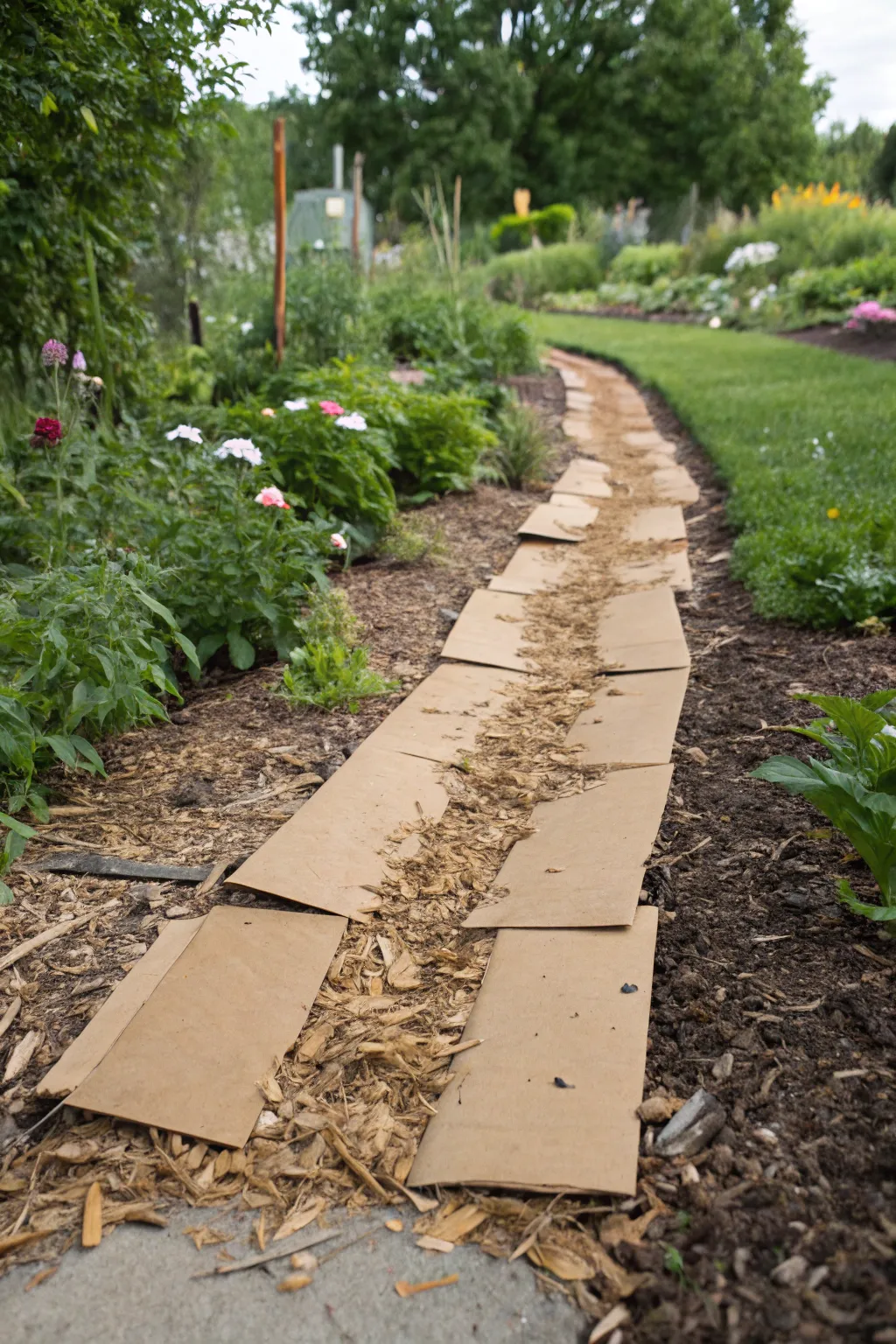
Utilize Pressed Paper for Undesirable Growth Management

Lay down pressed paper as a protective layer against weeds on your garden paths. It’s a practical, decomposable method for controlling undesirable growth.
Try these:
- Durable Pressed Paper Layers: Effectively block weeds in your garden walkways using these resilient pressed paper layers.
- Natural Ground Cover: Apply natural ground cover over the pressed paper barrier for increased weed suppression and earth enrichment.
- Garden Fasteners: Hold the pressed paper in position with dependable garden fasteners for lasting weed suppression.