
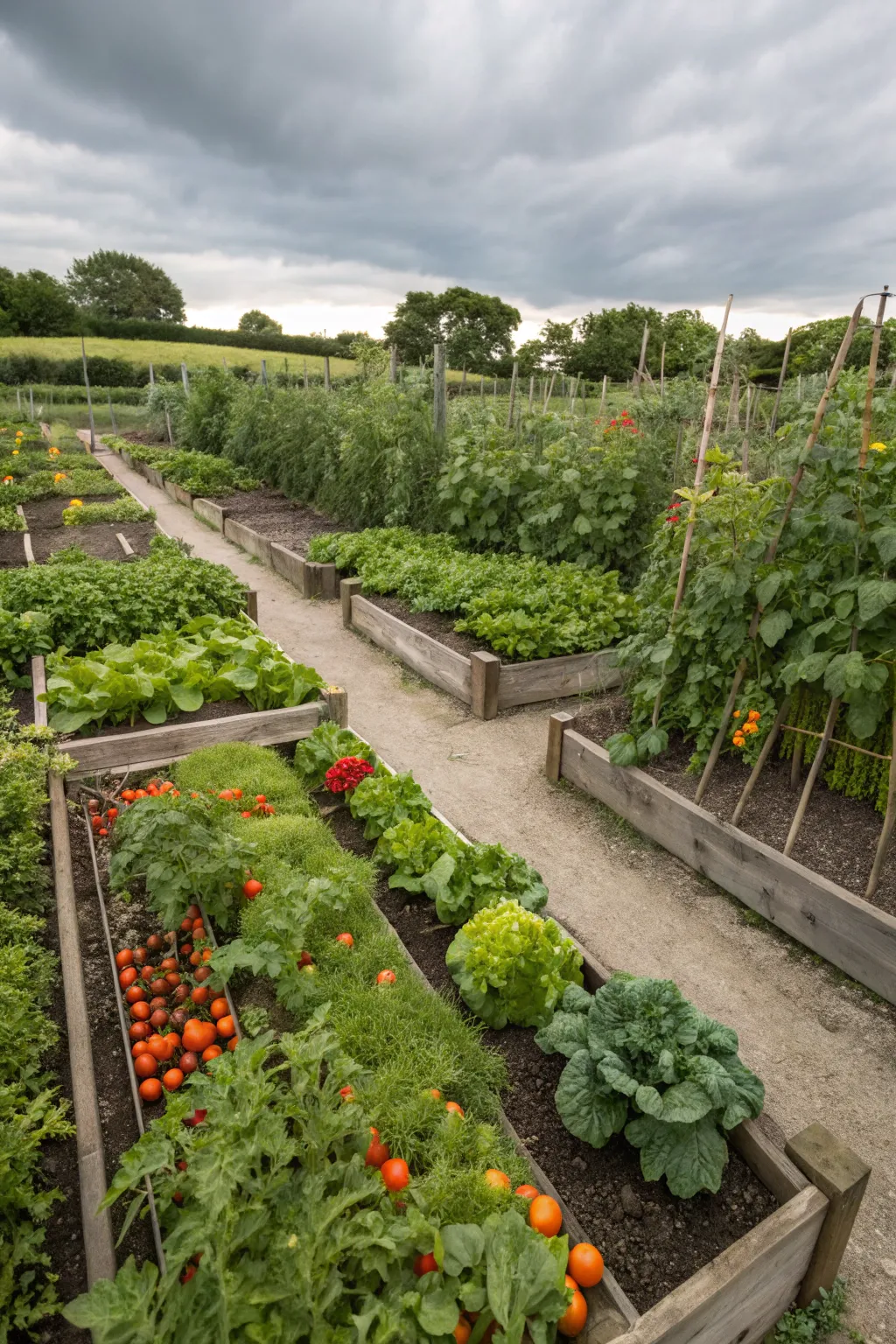
Cultivating a vegetable garden goes beyond simply growing edibles; it’s about creating an oasis that marries allure with function. The correct arrangement can transform your garden into an aesthetic delight and a source of sustenance.
Shade Expertise

Not every vegetable requires full sun; some prosper in partial shade. Leafy greens like lettuce and spinach excel in those shaded sections of your garden.
Might be a good match:
- Highrise Eden Planter: Elevate your shade greens for superior growth and water drainage. Perfect your partial shade garden now!
- Garden Shade Weave: Control light exposure to protect your leafy greens. Optimize shade for thriving greens today!
- Natural Lettuce Seeds: Cultivate fresh, crunchy lettuce in your shaded zones. Start your leafy garden adventure easily.
Earthy, Genuine Elements

Adding organic components like wooden containers infuses an earthy feel that integrates smoothly with the outdoor landscape. It’s a cherished method for ensuring the garden feels authentic.
Explore these options:
- Timber Cask Containers: Emphasize your garden’s rustic vibe with these versatile timber cask containers for a genuine touch.
- Woodland Style Garden Beds: Achieve a traditional garden atmosphere using woodland-style beds suitable for various plant types.
- Unprocessed Rock Route Sets: Create your refined garden trail using unprocessed rock sets, ideal for creating serene outdoor spaces.
Compact Area Simplicity

Compact area gardening is an incredible way to manage smaller areas productively. This technique lets you cultivate a range of crops without congestion, making it a favorite of mine.
Check if these fit your needs:
- Highrise Eden Planter: Enhance your garden’s layout using this sturdy, user-friendly wooden planter.
- Veggie Thrive Soil Mix: Promote plant development using a nutrient-packed soil mix designed for growing veggie plots.
- Veggie Spot Tags: Maintain garden order using robust spot tags that endure outdoor conditions.
Visual Harmony

Who believes a veggie patch can’t be picturesque? With carefully arranged borders and plant layouts, your garden can be both a visual masterpiece and a bountiful provider.
Possibly handy products:
- Ornamental Garden Bordering: Boost your garden’s appeal by using refined bordering to highlight and enrich the perimeter of your vegetation.
- Summit Garden Beds Set: Group your vegetation using chic raised beds, which introduce structure and charm to your outdoor area.
- Vivid Vegetation Tags: Infuse color and maintain order of your crops with these striking garden labels.
Radiant Plant Companions

Adding vibrant blossoms near vegetables not only supports bug control but also adds splashes of color. It’s akin to creating a stunning artwork with nature’s hues.
Useful items to consider:
- Bloom Seed Variety for Bugs: Amplify your garden’s charm and draw bug pollinators with this lively bloom seed selection.
- Woodland Style Garden Beds: Support your climbing veggies and flowers using a lasting and decorative trellis.
- Natural Veggie Starter Set: Grow your own fresh vegetables in a bright garden using this straightforward starter kit.
Sunshine Spots

Positioning sun-loving vegetables optimally is crucial for their success. I always guarantee that tomatoes and peppers receive their needed 6 to 8 hours of daylight.
A few relevant products:
- Highrise Eden Planter: Elevate your garden to maximize sunlight exposure. Perfect for tomatoes and peppers.
- Flora Climbing Frames: Support your vegetables with a robust frame, optimizing sunlight exposure efficiently.
- SunShield Garden Spread: Retain moisture and enhance sunlight absorption using this lasting garden spread.
Hydration Solutions

Ensuring simple water access can greatly alleviate your tasks. I always arrange my garden layout considering the nearness of a water source, streamlining daily watering.
A few suggestions:
- Moisture-Flow Tubing: Install moisture-flow tubing to guarantee efficient, uniform watering without waste.
- Hose Automation Device: Establish a hose automation device and effortlessly schedule your watering cycles.
- Rain Catchment Drum: Gather rainwater in a catchment drum to save water and decrease your utility costs.
Smooth Operations

A thoughtfully laid-out garden streamlines cultivation. By carefully arranging beds and instruments, you can establish an environment that fosters your gardening endeavors efficiently.
You might like:
- Highrise Eden Planter: Enhance your garden’s organization using straightforward raised beds, perfect for structured planting.
- Garden Toolkit: Equip your garden with necessary instruments for effective planting and upkeep.
- Garden Path Beacons: Light up your garden paths to improve charm and provide safety during night strolls.
Upward Growth

Employing structures and supports for climbing flora like beans and peas transforms your gardening approach. It not only conserves ground space but introduces an engaging dimension to your garden.
May just do the trick:
- Flora Climbing Frames: Amplify your garden’s charm with strong frames for climbing vegetation. Optimize area elegantly!
- Flexible Flora Holders: Support your climbers easily using adjustable holders. Promote growth and save area attractively!
- Curved Garden Portal Frames: Refashion your garden with a beautiful portal frame. Great for climbing roses and beans!
Starter’s Strategy

For those just starting out, having a simple planning guide can be transformative. It’s akin to possessing a roadmap for a fruitful and satisfying gardening adventure.
A few helpful options:
- Highrise Eden Planter: Improve your gardening experience using a raised bed—ideal for easy-to-manage veggie plots.
- Fundamental Garden Instrument Set: Commence your garden correctly with a complete instrument set, ideal for planting and care.
- Natural Veggie Seed Collection: Begin your garden confidently using a variety of organic seeds for diverse veggies.
Maximizing Area Use

Exploiting every inch is vital, particularly in compact gardens. Through innovative arrangements, you can design a layout that’s perfect for your space and boosts yield.
You might give these a try:
- Sky-High Green Towers: Grow more in less space using tiered planters, suitable for limited spaces and easy maintenance.
- Crest Garden Tiers: Improve your garden’s configuration with elevated tiers, enhancing soil condition and convenience.
- Overhanging Basket Planters: Incorporate hanging baskets for an attractive, space-efficient method to cultivate herbs and petite greens.
Verdant Exhibition

Envision your garden as a dynamic exhibition, with each plant serving as an art piece. By varying levels and textures, you can create a lively showcase that evolves with each passing season.
Some ideas to consider:
- Flexible Garden Frames: Enhance your garden’s visual with a adaptable frame, adding height and support.
- Woodland Style Garden Beds: Enhance your garden’s configuration using raised beds, optimizing area and accessibility for planting.
- Self-Regulating Feed Kit: Ensure productive watering for your flora using a simple to fit automatic irrigation system.
Treading the Garden Path

Integrating walkways into your garden’s blueprint doesn’t just amplify its appeal; it streamlines movement throughout the space. I’m drawn to the use of gravel or brick for their earthy feel, perfectly harmonizing with the garden’s natural features.
These products might be useful:
- Ornamental Pathway Tiles: Beautify your garden’s allure through these user-friendly tiles that endure seasons and wear.
- Fine Stones for Garden Ways: Construct an authentic garden trail using resilient fine stones, which beautifully accent natural settings.
- Kerbing Blocks for Garden Trails: Outline your garden routes stylishly with firm kerbing blocks, which offer a sophisticated, welcoming visual.
Cooperative Planting Miracles

Strategically blending greens and blossoms through cooperative planting fosters enhanced development and innate pest deterrence. I’ve found this method to be exceptionally effective, leading to a thriving, balanced ecosystem.
A few choices to try:
- Nature-Safe Defence Sprays: Strengthen your garden’s well-being using natural pest solutions that efficiently safeguard your vegetation.
- Assorted Garden Seed Collection: Kickstart your cooperative planting efforts with a varied range of garden seeds.
- Enticing Bloom Seed Variety: Add vibrant hues and bolster plant growth by incorporating an array of helpful garden flowers.
Lasting Beds

Establishing a permanent location for lasting flora like asparagus and strawberries guarantees a steady supply of your favorites. It’s a lasting investment in your garden’s tasty future.
Products that could assist:
- Highrise Eden Planter: Improve your lasting bed with a durable planter set for structured and effective planting.
- Trickle Feed Set: Ensure regular hydration for your asparagus and strawberries using an easy-to-install trickle feed system.
- Natural Lasting Flora Booster: Encourage growth in your lasting garden using specifically formulated organic booster for lasting health.
Elevated Garden Beds

I always opt for elevated garden beds to structure my vegetable plots, as they offer superior control over soil quality and drainage. They are ideal for anyone who prefers gardening with reduced strain and contribute a clean, organized appearance to the landscape.
Consider these options:
- Highrise Eden Planter: Revamp your garden using this adaptable set, providing enhanced soil management and ease of cultivation.
- Indestructible Digging Tool: Simplify your gardening tasks with this resilient tool, excellent for planting and soil amendment.
- Garden Elixir for Greens: Naturally amplify your garden’s yield using this organic boost, ensuring vibrant and nutritious crops.