
Designing a Montessori-inspired space is all about sparking your child’s autonomy and inquisitiveness. Come along as I present ideas that artfully combine common sense with creative elegance.
Minimalist Decorative Elements

Keep decor minimalist with pieces that add character. This maintains the room’s calm.
Consider these options:
- Woven Wall Hanging: Add charm with a wall hanging.
- Pastel Bunting Garland: Enhance the ambiance with a garland.
- Handmade Cotton Rug: Introduce comfort with a cotton rug.
Personal Reading Nook

Create a reading nook with cushions and a bookshelf. This encourages a love for literature.
A few suggestions:
- Cozy Floor Cushions: Enhance comfort with cushions, for reflection.
- Small Bookshelf: Organize your literature in a compact bookshelf.
- Soft Throw Blanket: Add warmth with a blanket, inviting sessions.
Child-Operated Music Player

A simple music player can be a addition, allowing children to enjoy music independently. It’s a way to introduce rhythm.
Check these products out:
- Portable Bluetooth Speaker for Kids: Encourage listening with this speaker.
- Easy-to-Use MP3 Player for Children: Allow your child to play tunes safely with this player.
- Kid’s Music System with CD Player: Introduce tunes to your child’s routine.
Embrace the Floor Bed

The floor bed is fundamental in Montessori spaces, granting children the liberty to get in and out on their own. I’ve noticed that this adjustment boosts self-reliance and ensures sound sleep throughout the night.
Items that may come in handy:
- Children’s Floor Mattress: Promote independence with a cozy floor mattress for simple access and restful sleep.
- Soft Cotton Pillow: Select a gentle, hypoallergenic pillow to guarantee your child’s comfort during the night.
- Natural Fiber Rug: Improve warmth and security with a snug, eco-conscious rug for your child’s area.
Child-Sized Furniture

Incorporate furniture that’s scaled down to a child’s scale. A short table can facilitate self-directed activities.
Some handy options:
- Kids’ Wooden Table and Chair Set: Promote independence with this table set.
- Colorful Children’s Dining Set: Brighten your child’s room with this dining set.
- Adjustable Montessori Stool: Support your child’s autonomy with a stool for activities.
Adjustable Lighting

Use an adjustable lamp that children can operate. This empowers them to control their environment.
Might be a good match:
- Dimmable Desk Lamp with Adjustable Arm: Let your child adjust for comfort in their space.
- Children’s Night Light with Adjustable Brightness: Encourage independence with a night light.
- Touch-Control LED Lamp for Kids: Empower them to control with a interface.
Low, Accessible Shelving

Add low shelves so that playthings and literature are accessible for young children. This arrangement cultivates a sense of arrangement, enabling children to select activities on their own.
A few things you might like:
- Wooden Montessori Shelving Unit: Choose a strong, low-level wooden shelving unit for easy access and arrangement.
- Adjustable Display Book Rack: Choose a flexible rack that displays literature for young readers.
- Natural Woven Storage Baskets: Use these natural woven baskets for storing toys, fostering simple access and cleaning.
Functional Art Stations

Set up a small art station with supplies like paper. This provides an outlet for self-expression.
Possibly handy products:
- Children’s Art Table and Chair Set: Create a mini art studio with this table set.
- Art Supply Storage Organizer: Keep art supplies organized with this storage.
- Eco-friendly Colored Pencils: Encourage expression with pencils for artists.
Open Space for Movement

Ensure ample open space for children to roam freely. This promotes activity and supports their physical progress.
Maybe worth checking out:
- Foldable Soft Foam Climbing Blocks: Promote exploration with climbing blocks. Simple to move for flexible layouts.
- Colorful Activity Play Mat: Provide a safe spot with a play mat. Ideal for activity and play.
- Storage Organizer for Toys: Maintain a tidy area with a toy organizer. Promotes organization.
Defined Activity Zones

Arrange designated spots for different activities like reading, playing, and crafting. This strategy aids children in arranging and comprehending their playtime.
Products that could assist:
- Children’s Craft Table Set: Inspire creativity with a table set designed for art and imaginative play.
- Kids Book Organizer Shelf: Arrange books neatly, making reading accessible for your children.
- Colorful Play Rug: Add comfort to playing spots with a vibrant rug perfect for children.
Sensory-Rich Textures

Incorporate a range of textures through rugs, cushions, and wall hangings. This tactile variety animates the senses and elevates the environment.
Explore these options:
- Fluffy Area Rug for Kids: Offer snug comfort to any playing spot with this plush rug.
- Textured Throw Pillows for Kids: Include tactile diversity with these gentle throw pillows suited for Montessori settings.
- Soft Wall Hangings for Sensory Play: Promote exploration with gentle wall hangings that offer diverse textures and visual appeal.
Nature-Inspired Decor

Introduce elements of nature with flowers. This connection can be educational for children.
You might like:
- Indoor Plant Set: Introduce tranquility with a plant set.
- Vase for Fresh Flowers: Enhance your room’s beauty with a vase for flowers.
- Woven Plant Basket: Add natural charm with a plant basket.
Interactive Wall Art

Hang art at a child’s eye level to engage them. This makes the space truly their own.
A few choices to try:
- Children’s Framed Art Set: Decorate with art at their height to inspire creativity.
- Peel and Stick Photo Frames: Update photos with frames, allowing kids to enjoy moments.
- Child-Safe Picture Hangers: Hang art at a child’s level with picture hangers. Make art accessible.
Simplified Clothing Storage

Use a wardrobe to make clothing accessible for children. This setup encourages them to take responsibility.
Some ideas to consider:
- Kids’ Open Wardrobe: Empower kids with a wardrobe.
- Low Drawer Dresser: Encourage self-reliance with a dresser.
- Storage Baskets for Clothes: Store clothing using baskets that are accessible.
Natural Materials for a Calm Ambience

Choose natural materials like timber and cotton to evoke a tranquil, soothing ambiance. This method not only appears appealing but also evokes warmth.
Give these a look:
- Wooden Children’s Desk: Impart warmth and utility to your child’s space with this elegant wooden desk.
- Cotton Canopy for Kids’ Beds: Evoke a snug sleeping space with this breathable cotton canopy.
- Natural Fiber Area Rug: Enhance your space with a gentle, natural fiber rug, suitable for a tranquil atmosphere.
Sensory Play Baskets

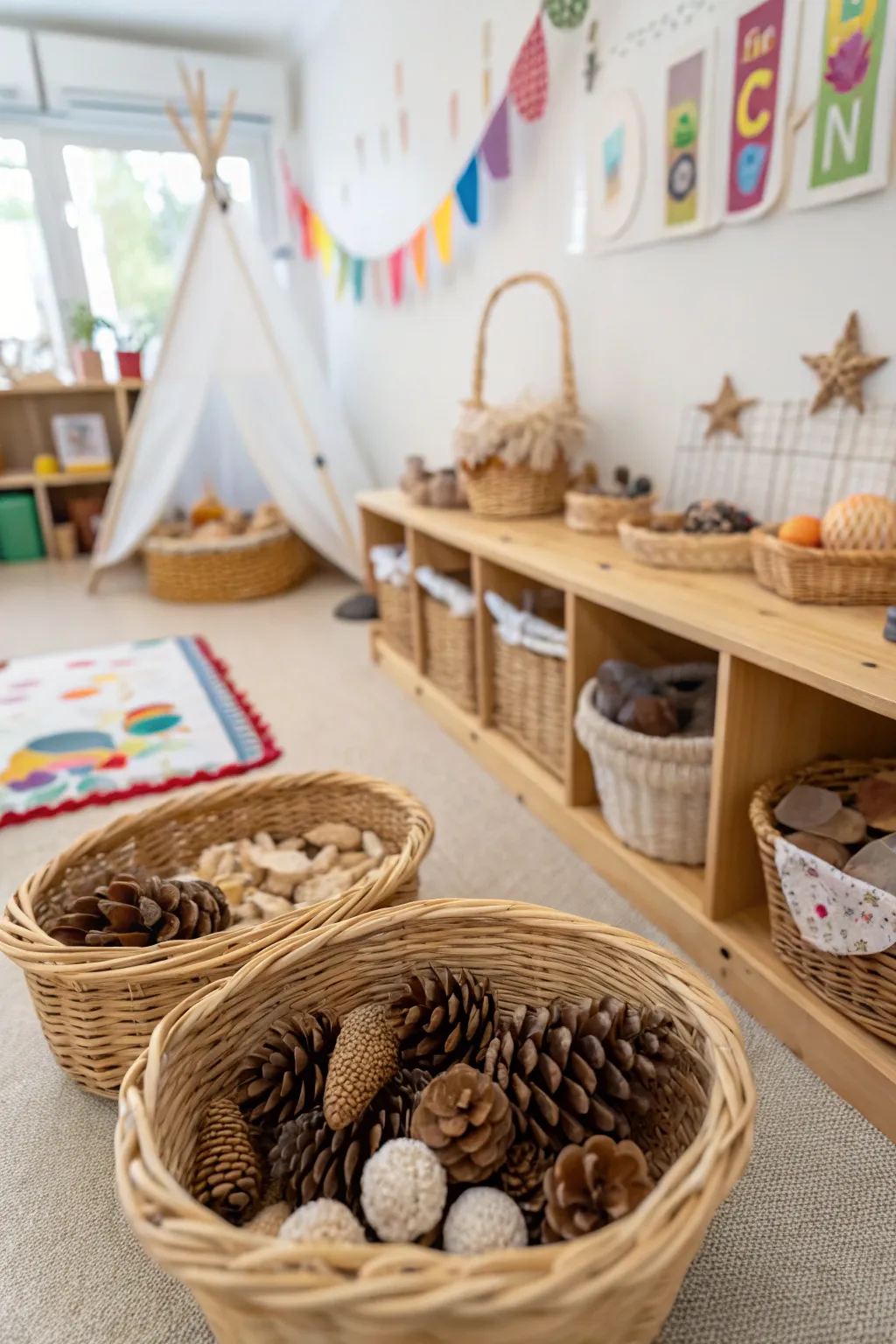
Introduce sensory play baskets filled with objects like pinecones. These baskets can ignite curiosity.
Possibly helpful picks:
- Natural Pinecones for Crafts: Inspire play with pinecones.
- Decorative Seashells Assortment: Enhance curiosity with seashells for learning.
- Montessori Wooden Sorting Set: Encourage sorting skills with this set.