
The art of smoothly merging wood and tile flooring can completely redefine your home’s atmosphere. Let’s explore some inspired concepts that promise your floors will achieve both visual harmony and functional grace.
Soft Curves for Flowing Artistry

A curved transition adds a gentle, flowing design touch. This softens the switch and gels perfectly in areas where you want a delicate divide. The soft, flowing lines create a calming, artistic space.
Explore these options:
- Bendy Slab-to-Plank Strips: Make seamless curves between floors with these easy-to-fit, bendy transition strips.
- Custom Curve Floor Trim: Up your style game with custom curve trim, designed for elegant floor transitions.
- Art Stone Floor Borders: Add that artistic flair with stone borders, giving a distinct and stylish floor transition.
Everlasting Elegance with Traditional Borders

A timeless border gives a neat and polished feel when switching from wood to tile. I often lean towards this method to keep things classic, making sure the transition feels natural and refined. The seamless blend creates a serene ambiance.
Try these:
- Ornamental Skirting Blocks: Lift your floor game with ornamental skirting blocks, perfect for linking different floor styles.
- Plank-to-Slab Joining Strips: Get that sleek transition from plank to slab with these durable joining strips.
- Tessellated Edge Fragments: Inject some artsy vibes using tessellated edge fragments, giving a dash of geometric class.
Country Charm Meets Modern Edge

Teaming rustic wood with modern slabs sparks a cool contrast. This blend is pure magic in spaces celebrating both old-school charm and today’s style. The juxtaposition of old and new creates a unique and inviting space.
You might give these a try:
- Rustic Barn Wood Floor Linking Strip: Effortlessly mix rustic wood with modern slabs for a seamless, stylish transition in your space.
- Modern Ornamental Clay Slabs: Crank up the modern vibes with sleek clay slabs that vibe perfectly with rustic wooden bits.
- Jigsaw Floor Slab Mats: Go for jigsaw floor tiles for a no-sweat blend of rustic and modern vibes in any room.
Modern Edge with Geometric Tiles

Geometric tiles can bring a fresh, modern vibe when bridging the gap between wood and tile. I’ve found that using these in kitchen spaces really spices things up, allowing the angular edges to flow effortlessly into the wooden boards. The clean lines and sharp angles create an invigorating space.
Possibly handy products:
- Geometric Ground Slabs: Add a touch of class with geometric ground slabs, offering a unique and artful transition.
- Slab Lock Adhesive: Get a super strong grip with our reliable slab lock adhesive, a must for fitting geometric slabs.
- Timber Decking Planks: Goes hand-in-hand with geometric slabs, these timber decking planks create an effortless change in flooring.
Straight & Narrow with T-Track

T-track trims are spot on for straight switches between floors of the same height. It’s a neat trick keeping a clean line, ace in doorways. The clean, straight line creates a sense of order and precision.
Maybe worth checking out:
- Alloy T-Track Floor Linking Strip: Land a seamless transition with sturdy alloy strips bridging floors effortlessly and elegantly.
- Adjustable Floor Linking Ramp Kit: Nail smooth floor transitions with adjustable ramps fitting snugly over uneven joints.
- Stick-Down Vinyl Floor Linking Strip: Secure and streamline your floor linking missions in a flash with stick-down vinyl strips.
Sleek Finish with Threshold Trims

Threshold trims are a go-to for making the switch between wood and tile. Coming in all sorts of materials, they offer a polished and refined look. The clean lines and sleek finish bring a sense of order to the space.
Consider these options:
- Adjustable Plank-to-Slab Trim: Nail that flawless floor transition with this adjustable trim, fitting seamlessly into any style.
- Alloy Floor Trim Strip: Step up your style with an alloy strip, giving a modern, slick finish between different floors.
- Flex PVC Joining Trim: Cover gaps between wood and tile in a snap using this flex PVC trim for a seamless look.
Dynamic Flair with Arrowhead Designs

Arrowhead patterns inject a lively vibe at the switchover, effortlessly marrying the materials. This is a surefire win in open-plan spots, bringing that ‘wow’ factor. The bold design brings an energetic feel to the space.
Give these a look:
- Arrowhead Slab Set: Craft awesome transitions with this arrowhead slab set, ensuring smooth style across your open spaces.
- Plank & Slab Linking Strips: Amp up your decor with top-notch linking strips, blending wood and tile for a flawless home vibe.
- Arrowhead Layout Guide: Nail perfect arrowhead patterns using this layout guide, adding a sophisticated touch to your floors.
Texture Party with Material Mix-Ups

Mixing materials like stone and wood amps up the texture and feel at the transition. This can turn your floor into the star of the show in any room. The varied textures create a rich, inviting atmosphere.
A few things you might like:
- Earth Stone Slab Finish: Boost your room’s vibe with versatile earth stone slabs, offering dynamic visual punch.
- Timber Floor Linking Strips: Blend wood and tile like a pro using these linking strips for a unified room look.
- Mixed Texture Floor Pad: Add a touch of subtle charm and comfort with a mixed texture floor pad in busy spots.
Seamless Flow with Aligned Grout Lines

Matching grout lines with wood seams creates a smooth, uninterrupted flow, perfect for minimalist vibes. This trick blurs the lines between different floor types. The continuity of lines creates a sense of calm and order.
A few choices to try:
- Wood-Style Porcelain Slab: Score seamless transitions with real-look wood porcelain slabs, a win for minimalist design.
- Flex Joining Strips: Up your floor plan with flex joining strips, ensuring smooth wood and tile alignment.
- Match Tone Filler for Slabs: Tie your look together with match tone filler, guaranteeing a unified and slick floor appearance.
Make a Statement with Direct Transitions

A direct transition grabs attention and can turn your floor into a real centerpiece. It’s a brave move for those wanting to shout about the transition zone. The bold, direct line creates a strong, defined statement.
These products might help:
- Slab and Plank Linking Bands: Spruce up your floor with seamless transitions; these bands boost stability and visual appeal.
- Ornamental Linking Trim: Dab some charm onto your floor transitions for a daring and pro finish.
- Chevron Timber Slabs: Snag eyes with trendy chevron timber slabs, making your transition zone a total winner.
Dynamic Angles with Diagonal Cuts

Diagonal cuts bring a playful twist, ditching the usual straight lines. I’m always nudging folks to give this a whirl if they’re after a dash of drama in their spaces. The unexpected angles create a sense of movement and excitement.
These products might be useful:
- Threshold Joining Strips for Floors: Step up your style game with these seamless transition solutions, designed for that polished and punchy floor vibe.
- Slab & Plank Grip Kit: Get a solid grip for your slabs and planks, crafting flawless, dynamic transitions.
- Floor Joining Trim: Sprinkle some charm on your floors with these easy-to-fit joining trims.
Practical Hallways with Tiled Mats

Popping in a tiled patch near doorways works as a handy ‘doormat’, shielding wood floors from dirt and damp. It’s a neat fix I often push for busy homes. The practical tiled area creates a welcoming and functional entryway.
Items that may come in handy:
- Ornamental Clay Floor Slabs: Jazz up your hallway with ornamental tiles blending beauty and function for busy spots.
- Slab Linking Strips: Make that wood-to-tile shift smooth with these fuss-free linking strips.
- Damp-Proofing Filler: Keep your tiled hallway tip-top with damp-proofing filler, ace for busy areas.
Defined Spots with Stepped Thresholds

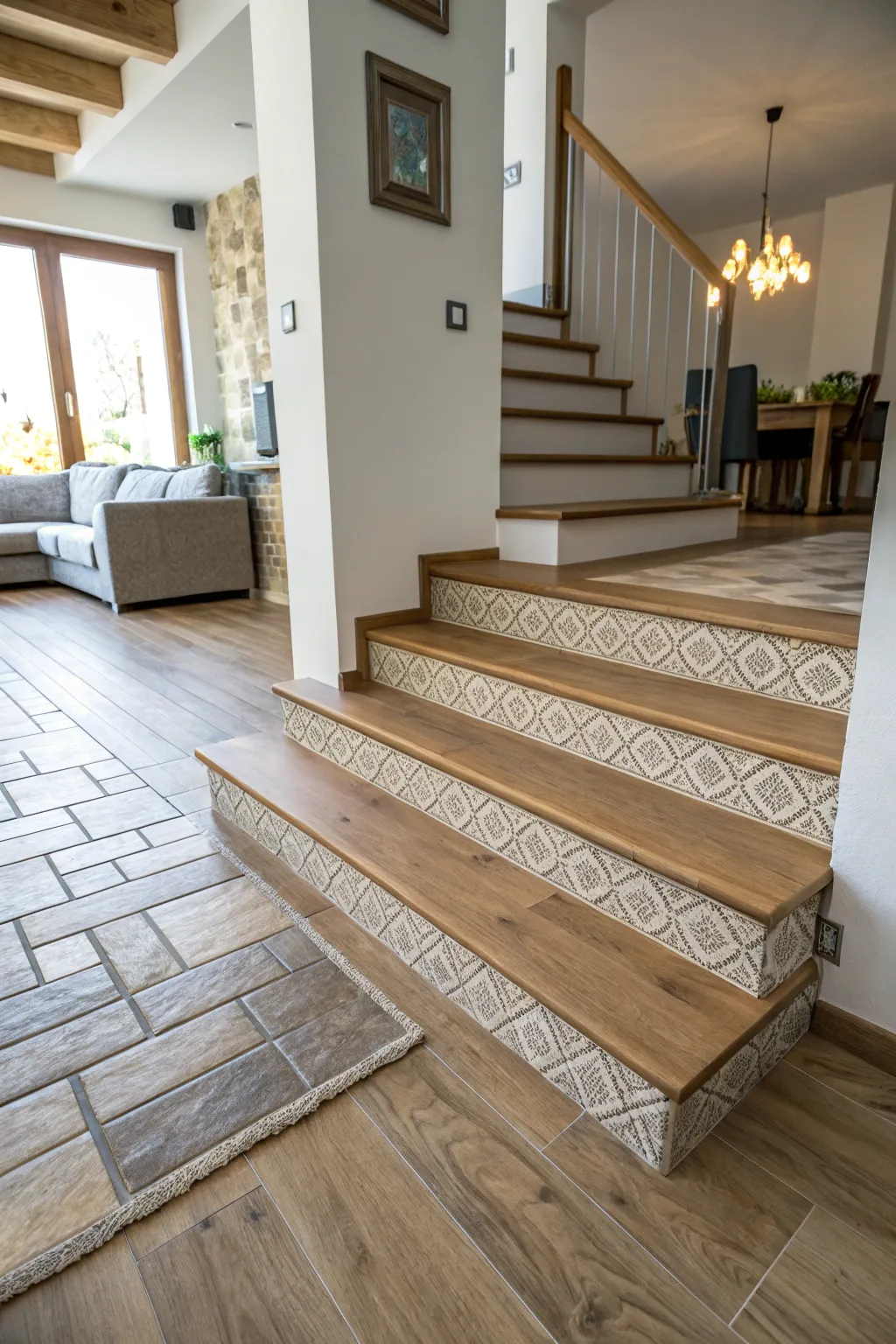
Using steps in transitions carves out spots with height tweaks, like a natural. It’s a no-brainer yet killer way to sort transitions in split-level plans. The change in elevation creates a sense of separation and definition.
You might like:
- Wood & Tile Linking Strips: Crank up your floor transitions with sleek strips for a seamless vibe between wood and tile.
- Ornamental Stair Step Stickers: Spice up your steps with fuss-free ornamental stickers for stair steps.
- Non-Slip Step Covers: Keep things safe on your stairs with sturdy non-slip covers, ace for busy homes.